History of Rome Township
Rome Township has a rich history dating back to the early settlement of Athens County, Ohio. Our community has evolved over the centuries while maintaining its rural character and close-knit community spirit.
Historical Photo Gallery
Explore historical images from Rome Township's past. Click any image to view it larger and navigate through the collection.
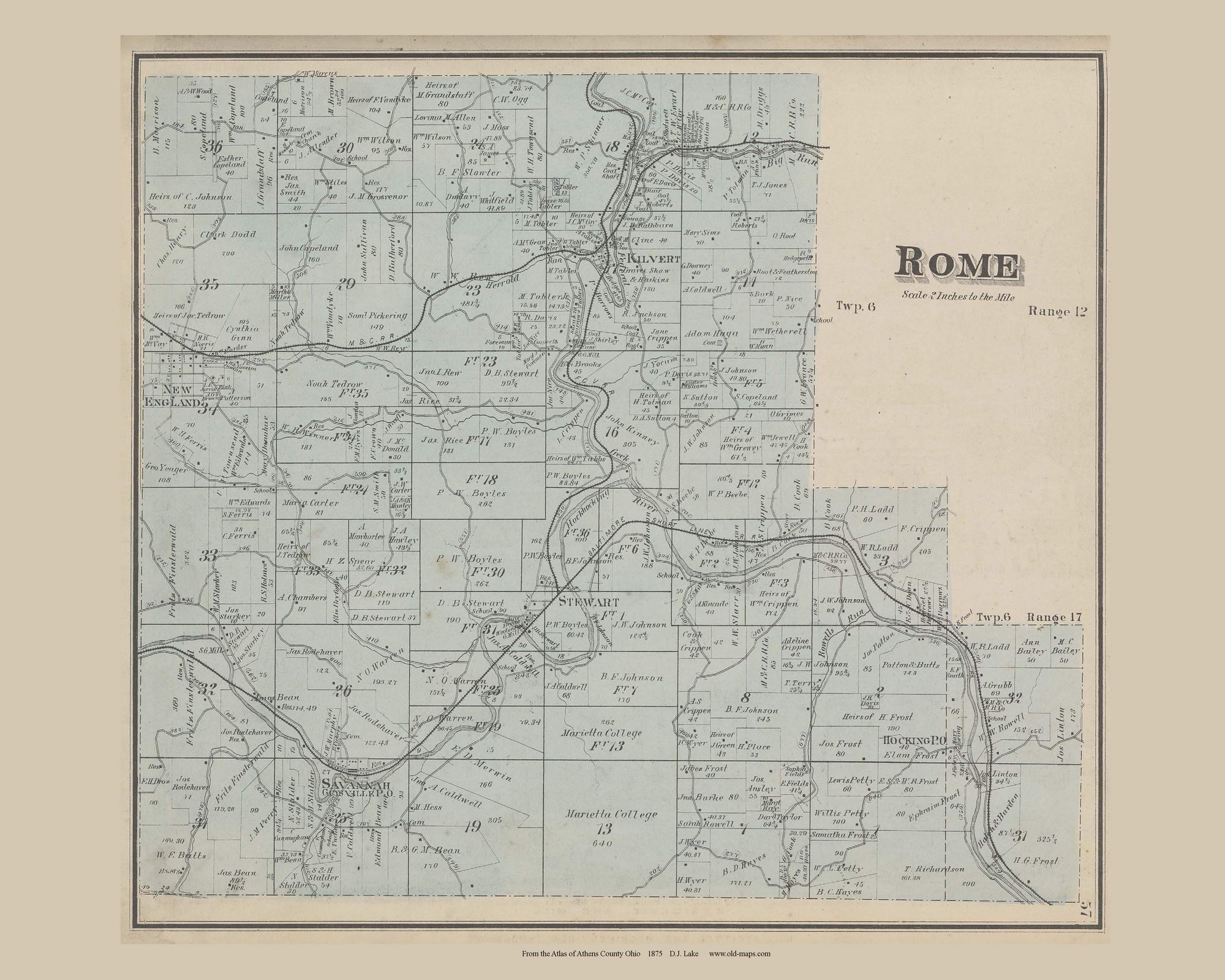
Early Settlement
Rome Township was officially established on April 4, 1811, when the Athens County Commissioners carved it from the eastern portion of Troy Township. The area was originally inhabited by Native American tribes before European settlers arrived in the late 18th and early 19th centuries. The township was named after Rome, reflecting the classical naming convention common in Ohio during this period.
The first known settler was Alexander Stedman, who moved to Rome in 1804 after nearly two years in nearby Athens. By 1805, Joseph Wickham, an English deserter from the American Revolution, had established a homestead. Eliphalet Case arrived with his family in 1808, followed by William S. Doan around 1820 (after initial settlement in Athens County in 1813). Other early families included the Stewarts, with Daniel Stewart becoming a prominent figure as one of the first justices of the peace, a long-serving county commissioner, and an appraiser of college lands tied to Ohio University.
Early settlers were drawn to the area by its fertile soil, abundant timber, and access to waterways. Agriculture quickly became the backbone of the local economy, a tradition that continues to this day.
Development Through the 19th Century
Throughout the 1800s, Rome Township grew steadily as more families established farms and small businesses. The construction of roads and later railroads connected the township to larger markets, allowing local farmers and merchants to thrive.
Key developments during this period included:
- Establishment of one-room schoolhouses to educate local children
- Formation of churches that became community gathering places
- Development of small mills and craft industries
- Organization of the township government structure
20th Century Changes
The 20th century brought significant changes to Rome Township. The advent of automobiles and improved roads connected residents more closely to Athens and other nearby cities. While some residents began commuting to work in urban areas, agriculture remained an important part of the township's identity.
The consolidation of rural schools, electrification of farms, and modernization of agriculture transformed daily life while the community maintained its strong sense of identity and mutual support.
Modern Era
Today, Rome Township balances its agricultural heritage with modern development. The township continues to attract residents who value rural living, community engagement, and the natural beauty of southeast Ohio.
Recent years have seen efforts to preserve historical sites, maintain infrastructure, and ensure that Rome Township remains a great place to live, work, and raise a family.
Historical Landmarks
Several historical landmarks and sites of interest can be found throughout Rome Township:
- Historic cemeteries dating back to the early 1800s
- Original farmsteads and barns
- Former schoolhouse locations
- Historical township hall